Lab-grade biomechanics.
Without the lab
Portable 3D movement analysis solution that practitioners and research teams can trust. Make faster and better decisions without expensive labs or complex setups.

Model Health converts smartphone videos into
validated, decision-ready movement data.
Founded by Stanford researchers, our technology generates accurate 3D movement analysis from just smartpone videos.

Markerless motion capture, anywhere

Automated data analysis for most frequent physical tests

Health & performance dashboards and reports
Trusted by teams across the world's top sporting leagues







Rehab and return-to-play
decisions
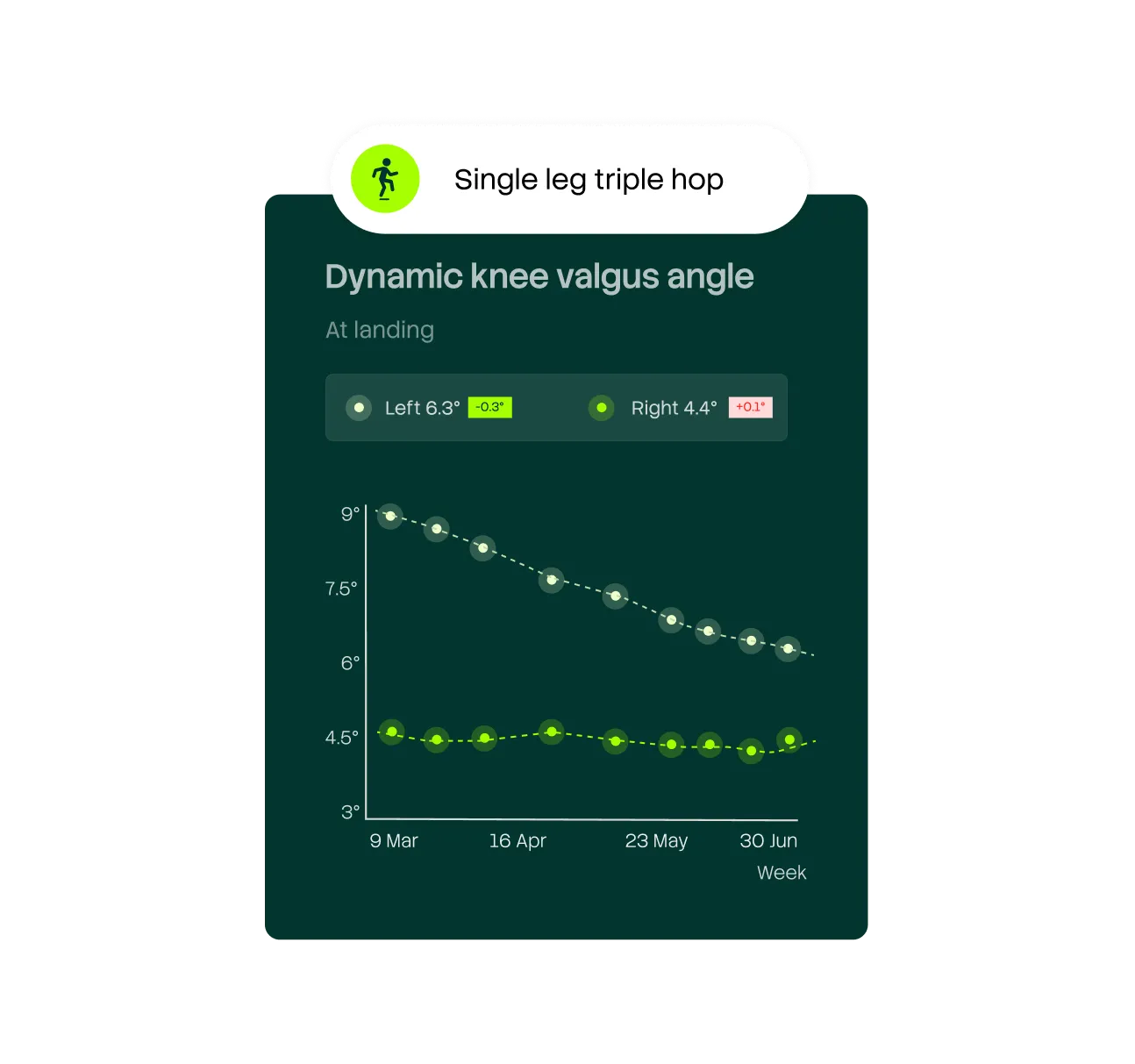
Track rehabilitation progress, identify compensation patterns before they become problems, and personalize protocols based on objective data.
Performance
monitoring
.webp)
Spot performance drops, identify technique improvements, and uncover potential. All grounded in individual baselines and normative datasets.
Research and product
development
Accelerate research cycles with automated processing, deployable in diverse environments where standard motion capture falls short.
Platform
integration
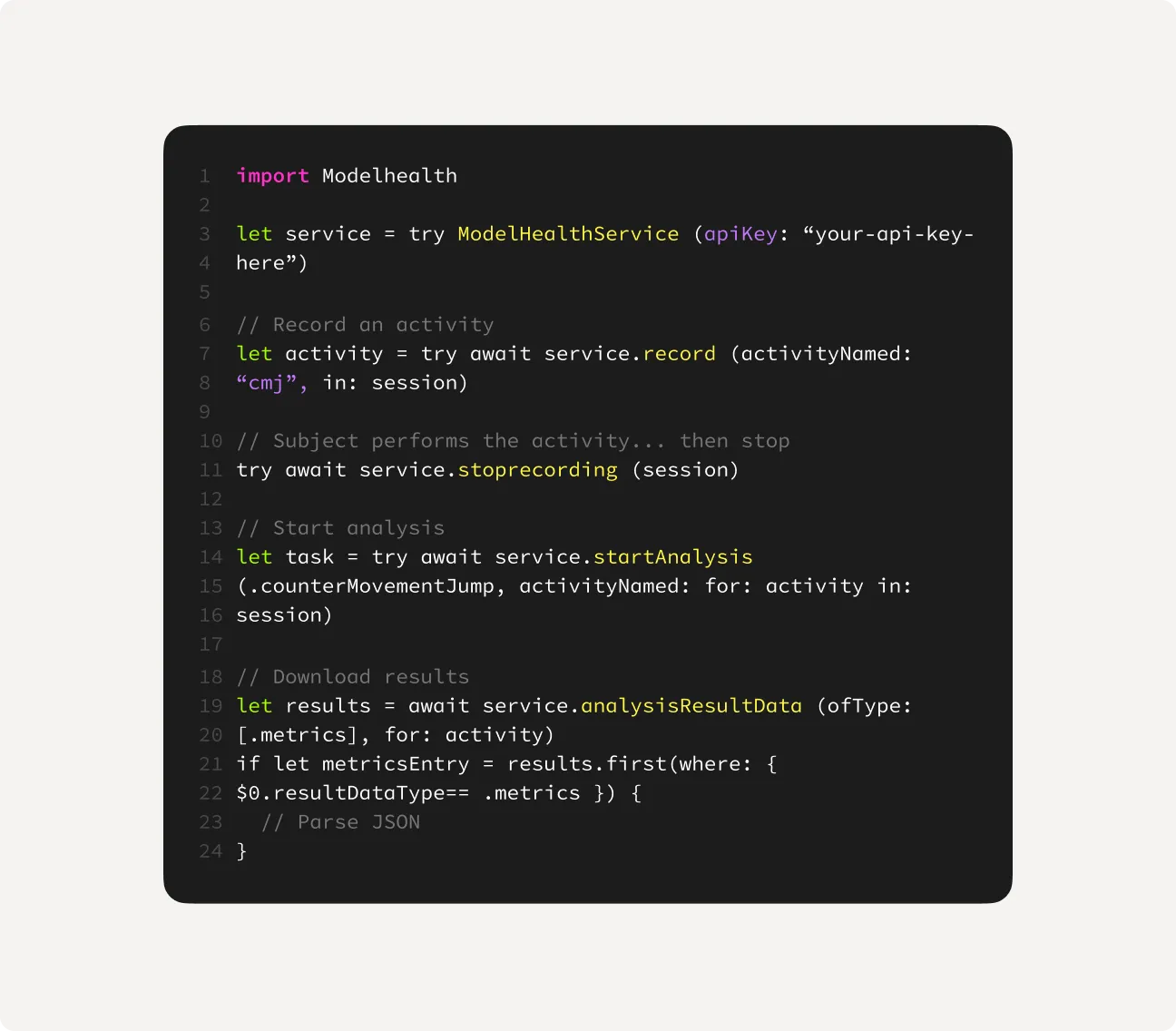
Integrate directly into your platform via SDK and access movement data programmatically to power your own workflows and products.
Built for professionals working with human movement. Different roles, different workflows. One shared need: data you can trust.
For clinical and medical staff who want to move beyond observation
Identify the root cause
of movement limitations with objective biomechanical data
Track rehabilitation progress
over time using consistent, repeatable measurements
Support clinical decisions
with clear, data-backed recommendations
Communicate progress
clearly to patients with visual reports they can understand
.webp)
For performance teams who want to quantify what drives athletic performance
Analyze movement strategy
not just load or output
Track asymmetries and coordination patterns
and how they evolve across the season
Support readiness and return-to-performance decisions
with objective data
Individualize training interventions
based on individual baselines and team benchmarks
.webp)
For researchers and engineers who want to scale biomechanics beyond the lab
Capture research-grade 3D kinematics
without marker-based systems
Run reproducible protocols
across sites and cohorts
Accelerate research and development cycles
through automated movement analyses completed in minutes
Export raw and processed data
for rigorous downstream analysis
.webp)
For product teams who want to build fast
Integrate 3D motion analysis in days
with a few lines of code, no computer vision and biomechanics teams required
Ship validated, standardized kinematics
inside your existing product workflows
Route results into your EMR or AMS automatically
without duplicate entry or file exports
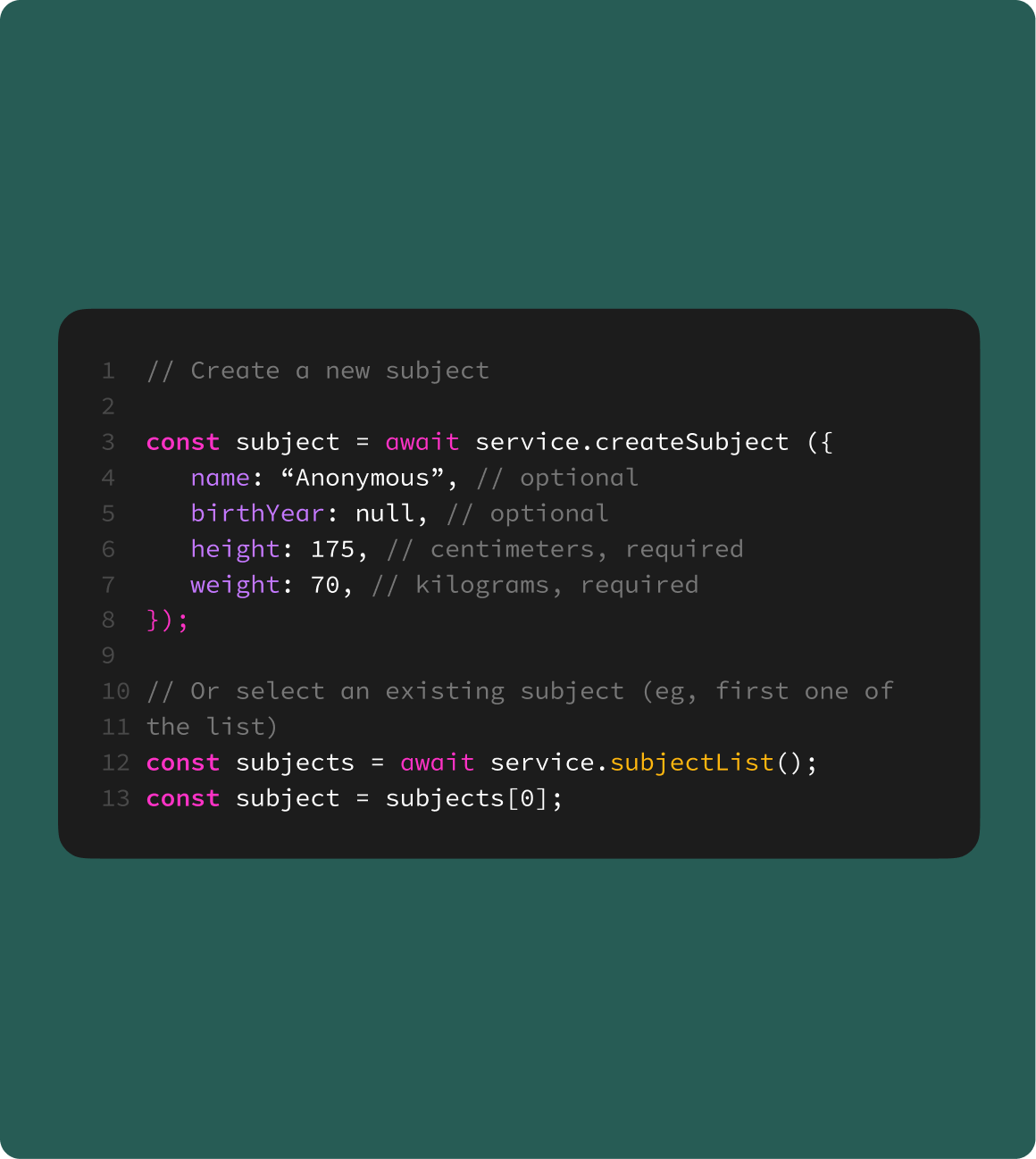
Access data programmatically
for analytics pipelines, research workflows, and ML applications
Hear it from our customers
1 / 5
What our clients say:

Our partnership with Model Health is built on a shared ambition: bridging the gap between measurable performance and movement quality. By combining Kinvent’s field-based strength and force assessments with advanced motion analysis, we provide clinicians with a more complete understanding of human movement, enabling better decisions and better outcomes.

Athanase Kollias
CEO of KINVENT

I used to do running analysis with 2D video and software that required me to mark joints at specific moments in the gait cycle to estimate angles. I really appreciate being able to collect and visualize full kinematics time series with the same 2D video and built-in analysis with Model Health. I'm developing a new running analysis program using Model Health and I'm confident that the ability to provide more comprehensive data will set me apart and allow me to provide much better results to the runners I work with
Jessica Hunter
PhD, Kinesiology, Running Certified Coach
Model Health has been a huge boost to our small private practice. We have been able to implement it mainly with 3D running gait analyses as well as incorporate it into our ACL return to sport testing workflows. The set-up is quick, data collection is seamless, and the data processing continues to get faster. The reports that it generates are accurate, consistent, and are high quality for kinematic data, with easy-to-understand visualizations for joint angles and key metrics.

Alex Peters
Sports Physical Therapist at Impulse PT

Using this system in my clinic has been a game change. It provides clear, actionable insights into movement patterns, helping me make more informed decisions for my patients' treatment plans. The accuracy and ease of use make it an invaluable tool for improving patient outcomes.
Dr. Wilfredo Agredo
Medical Doctor
.svg)
Model Health's ability to quickly understand our needs, combined with their responsiveness, make our collaborations particularly effective!

Decathlon
R&D and QA developer at Decathlon
It's been great to implement Model Health in our clinic. It challenges our thoughts and gives us a way to objectively look at movements for those with challenging lingering pain when strength, Range Of Motion, and structure are "healthy". Especially useful for those working with athletes where we are unable to "see" high speed movements

Vien Vu
High-Performance Sports Physical Therapist at Stanford Athletic

We’re excited to integrate this innovative motion analysis into our ACL pathway at the POSM Performance Lab. This technology allows us to quantify contact time, RSI, and knee and hip joint kinematics during the triple hop test, providing a more comprehensive assessment of capacity following ACL injury.
Nic Blackah
Physiotherapist at POSM Performance Lab
Developed in academic research. Built for real-world use
Built on the foundations of OpenCap, Model Health delivers validated movement analysis for rehab, performance, and R&D.
Get started with Model Health
See how Model Health fits into your clinical, performance, or research workflow. Create your free account and start analyzing movement in minutes.